LRS software has been running in the world’s largest organizations for more than four decades, and our customers have come to value our mainframe expertise. But while we know a lot about managing output, there is a lot we can learn about other aspects of the mainframe ecosystem. As the capabilities of the IBM Z platform continue to evolve, our development and support teams strive to stay abreast of all the features and innovations available to the mainframe community.
The annual IBM Z Day offers our developers a chance to learn not only the latest and greatest System Z hardware features but also explore a variety of topics related to the future of computing. Last month, nine LRS employees joined the online virtual event and attended sessions on AI, hybrid cloud computing, quantum-safe security, and more.
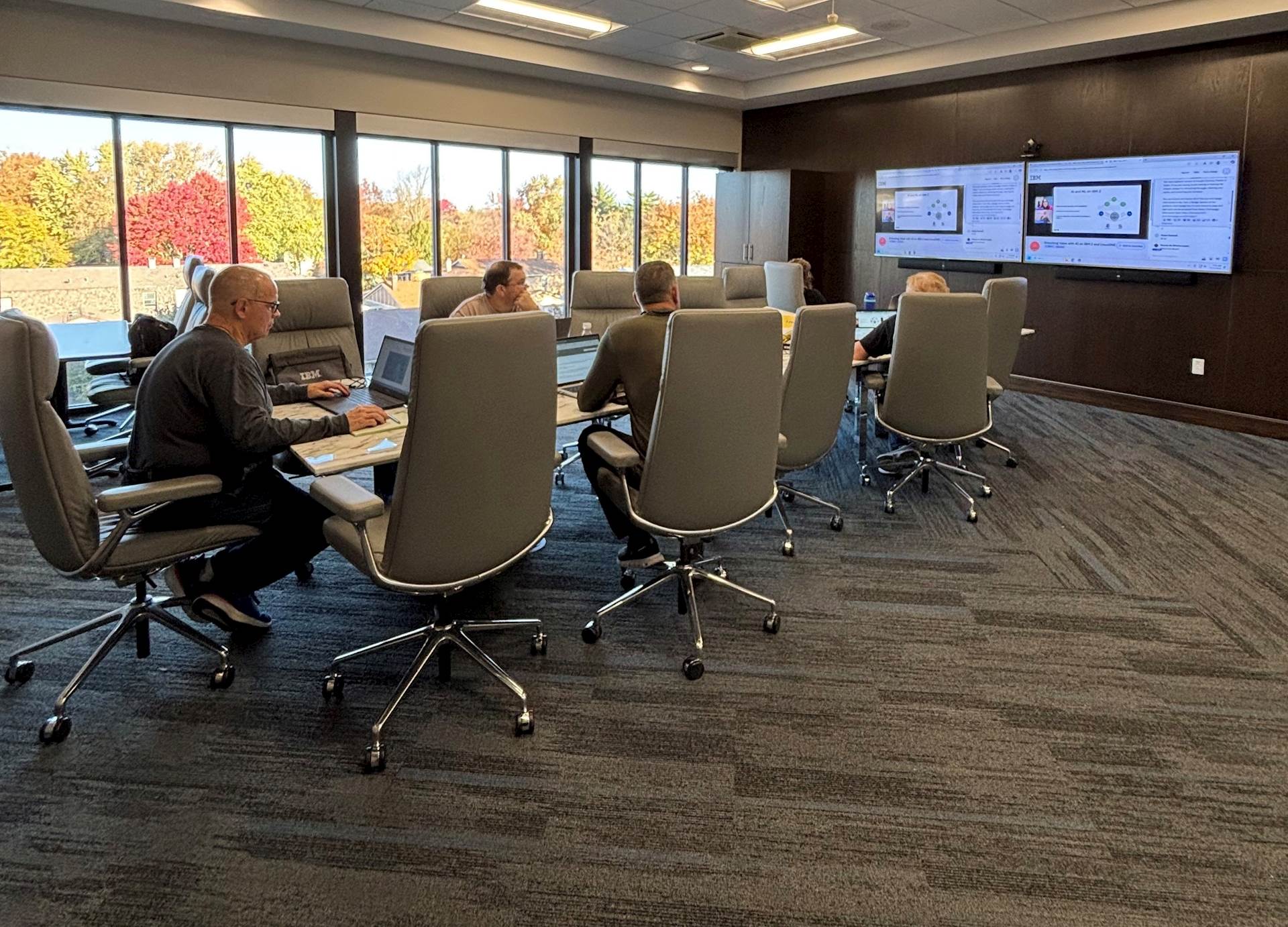
In our product development work, LRS developers make extensive use of new features in every new release of the z/OS operating system. Each update to IBM’s mainframe operating system, in turn, leverages the capabilities of the latest processor and other IBM hardware components.
For example, the z/OS Cryptographic Services updated for z/OS 3.2 enable us to greatly enhance the security of JES-based data sent from our VPS mainframe software to remote hosts like email servers. These cryptographic APIs likewise harness the post-quantum encryption features of the latest IBM Telum II CPU.
After attending the IBM Z Day sessions, LRS Senior Software Developer Pat Cunningham said “I especially enjoyed the Post‑Quantum Computing presentations and was struck by how many foundational practices we in Host Development and z/OS system administration are already putting in place. For example, we can remove or minimize the use of unsafe SSL/TLS ciphers by standardizing on TLS 1.2 and even enabling TLS 1.3 for in-flight data encryption in the latest versions of our VPS/Email product. We also plan to incorporate IPPS support in our upcoming VPS V2R13 product release, which leverages IBM’s Cryptographic Services APIs as well as the latest OpenSSL libraries, which we update on a regular cadence. In a world of ‘harvest now, decrypt later’ threats, everyone needs to stay current with the latest advances in security.”
In our IBM Z Day debrief, Ron Rudd, a Senior Software Developer in our mainframe software group, said “Many of the sessions covered topics outside the scope of my daily work, but were very interesting to learn about. For example, I don’t use AI on the mainframe in the ways that were discussed in some of the sessions. However, it is apparent that many of our customers are or will soon start using it, so it’s important for us to stay informed about innovations like these.”
Our newest addition to the mainframe development team, Nichol Friedman, has been at LRS for just over a year and a half. He and former Northern Illinois University classmate Tyler Stenberg (who will be joining our team next month) are introducing some of our more senior programmers to new IBM resources designed to bring mainframe knowledge to a new generation of programmers. With regard to IBM Z Day, Nichol remarked “The use cases for Zowe and the z/OS open-source projects were notably interesting to me, and the sessions on quantum-safe encryption were also great.”
As the manager of our mainframe development team, the IBM Z Day sessions gave me a lot to think about. In one of Lucas Sahn’s sessions, he mentioned the IBM Z Global Skills Accelerator Program, which helps companies bring new mainframe development resources up to speed in a structured manner while imparting the skills to help them succeed. As we onboard new team members, resources like these can help a lot.
Taking off my manager hat and speaking as an active mainframe developer, one of the most illuminating IBM Z Day sessions was “Open Source, Open Doors: Innovation on the Mainframe,” which sought to dispel many myths about open source on z/OS. I am relatively new to the open-source world and must admit to believing many of the myths debunked by the panel.
One myth is that open source is not secure. However, as the presenters explained, the fact that the open source is so visible makes it easy for contributors to identify problems, resolve them, and distribute the improved code. Other myths revolve around the “too many cooks in the kitchen” phenomenon. If anyone can work on and change open source code, then what’s to prevent bad code from proliferating? The answer is: other contributors working on the same code actively work to ensure the quality of the end product.
In the open-source community, changes are not automatically accepted and implemented. The many maintainers of each open-source project extensively evaluate and test code changes before they are distributed. What’s more, the maintainers of this code are generally available for support, as is the larger open-source community. They have a vested interest in seeing their code work and be used in the real world.
This is a very different world than the one in which I learned to develop mainframe-based solutions. But in essence, that was the larger takeaway from IBM Z Day 2025: things are changing fast, and professionals need to keep their eyes on the horizon for the hardware, software, and even societal innovations that will preserve the IBM Z platform’s role as the premier enterprise computing platform.
As we prepare for the arrival of 2026 and the next release of our LRS mainframe output management suite, we welcome the upcoming advancements in mainframe technology. We also look forward to the 2026 IBM Z Day event and encourage others in the mainframe community to take advantage of this great opportunity to help shape the future of enterprise computing.