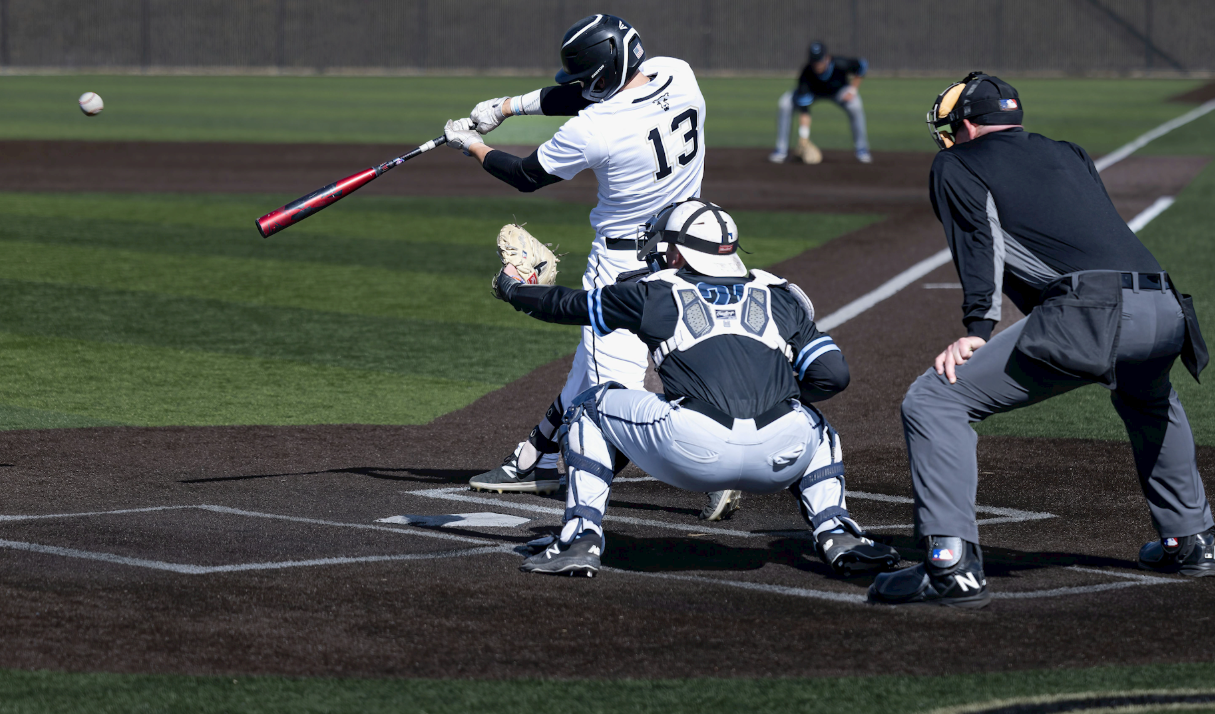
It’s early May, and the baseball season is already six weeks into its long schedule. There are many reasons to appreciate baseball. Some like it because its arrival signals that summer is just around the corner. Others like it because it lends itself to deep statistical analysis. Still more people enjoy watching the game evolve while its fundamentals stay the same. Recent changes include newer rules, such as a pitch clock, that are meant to speed up game play and increase the action.
The biggest change this year is the introduction of the ABS (Automated Ball-Strike) system. ABS allows batters, pitchers, and catchers to challenge the umpire’s ball and strike calls during a game, with each team getting two challenges per game. Each challenge is reviewed using information from Hawk-Eye camera technology that tracks pitch location against each player’s specific strike zone.
We previously mentioned that baseball is a game of statistics, so what are the numbers telling us about the effect ABS is having on the game?
The Strike Zone Is Different: With ABS, the zone is defined by math, not estimated by a human. The ABS strike zone is a two-dimensional rectangle set at the midpoint of home plate, with the top at 53.5% of the batter’s height and the bottom at 27%. Human umpires have historically called a strike zone that is bigger and more oval shaped, with the top half near 55.6% and the bottom at 24.2%.
In 2025, fastballs thrown within the width of home plate and between zero and four inches above the 53.5% cutoff were called strikes 54.3% of the time. So far in 2026, those same pitches are being called strikes only 40.8% of the time. This is a sizable behavior shift for umpires: they have shrunk the zone and self-corrected in anticipation of being challenged.
The Walk Rate Explosion: Last season, the league-wide walk rate was 8.4%. Between 2021 and 2025, it was between 8.2% and 8.7%. This year, the walk rate has jumped to 9.6%.
Ripple Effects on Pitching & Hitting
Pitchers: Hurlers who get lots of swings and misses are seeing an uptick in strikeout rate and CSW% (called strikes + whiffs). Command-first pitchers who nibble at the plate and stay away from contact are being punished by the smaller strike zone.
Hitters: Patient hitters who like pitches higher in the zone are walking more frequently and seeing their on-base percentage (OBP) climb.
The strategy of when to challenge: Players challenged more pitches in high-leverage counts, but the success rates are lower in those situations: only 44% of 2-2 count pitches were overturned, while 57% of first pitches during a plate appearance were overturned.
The Death of Pitch Framing?: With the challenge system, over 98% of pitches are still called by the home plate umpire, so getting borderline strike calls (even if it means a catcher dragging an outside pitch back into the zone) still has value. By framing pitches, opponents are forced to burn challenges or maybe not challenge at all. Framing isn’t dead, but it is under pressure.
Fan Experience: This has nothing to do with statistics, but with each challenge, everyone paying attention to the game stops what they are doing and looks at the big video board in the outfield to see the animation of the ball arriving at the plate. Those few seconds of anticipation are shared by everyone in the stadium, and this is a genuinely new communal experience that hasn’t existed in baseball before.
One Reason Accuracy Matters: While umpires call 93% of pitches correctly, the remaining 7% can have enormous effects, and in the era of legalized sports betting, the pressure to eliminate errors is intensifying.
What ABS is showing us is that once you give players a way to correct a bad call, everyone (including umpires), starts to behave differently. That is what algorithmic accountability looks like in the real world.
Do you want to explore how AI can transform your business? Please click here to fill out a form and request a meeting with us. Don’t have a data architecture for AI you trust yet? LRS can help you collect, organize, and analyze your data so that it is business-ready.